

Cosmic Blindsight
How the radiance of the city has blinded us with abstraction.

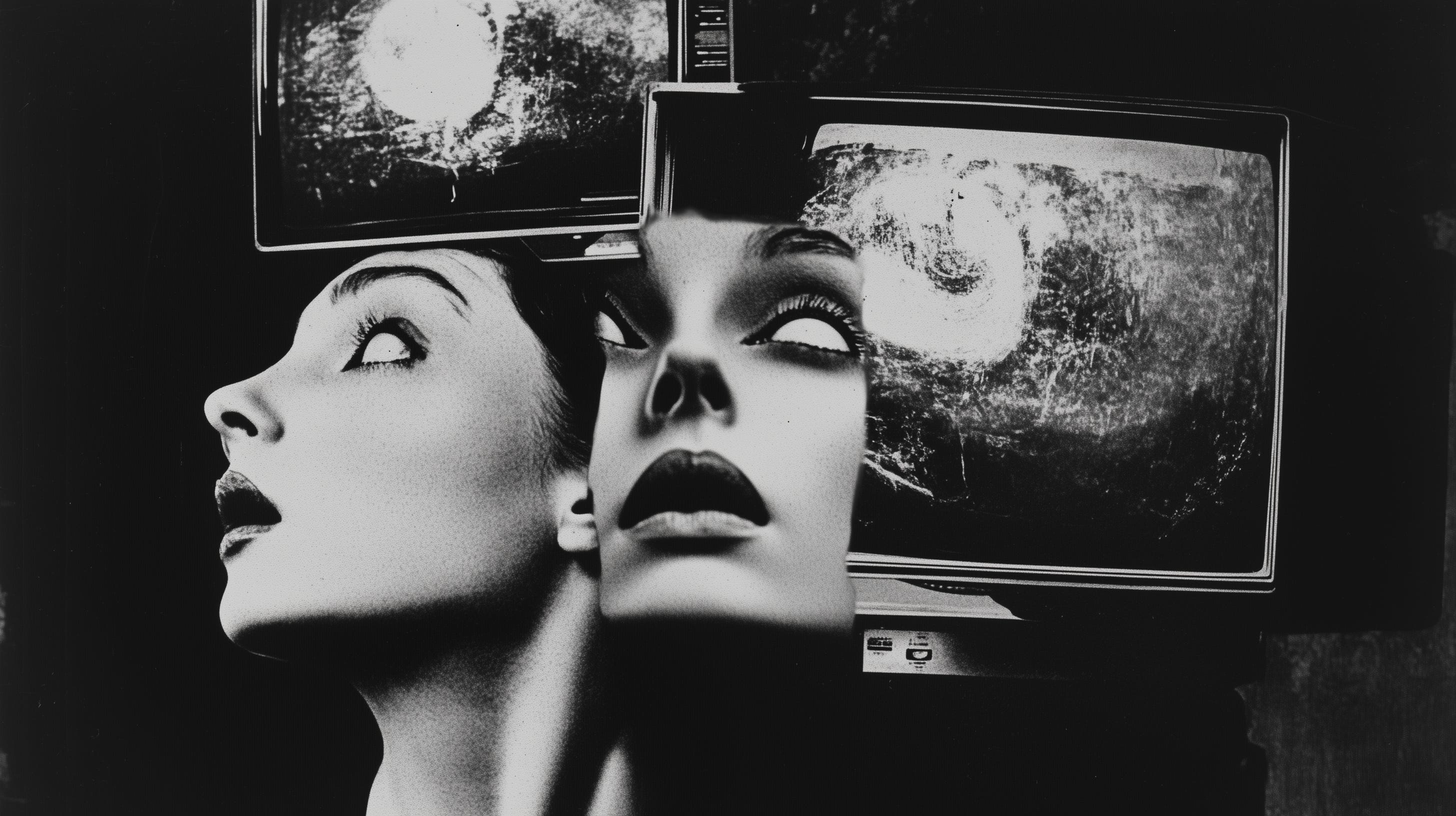
While we might quarrel over whether humanity’s journey across the last ten thousand years has been an ascent or a fall, we can agree that it represents a metamorphosis — one not yet complete.
Cities have been major organs of this transformation. The centripetal force that has drawn humanity together in a vortex of creative destruction has also been an engine of displacement, severing us from our relationship with nature and from the cultures that birthed us. With exponential intensity, humanity has embarked on an odyssey into abstraction that has paralleled the growing complexity of its urban environments.
From transitory settlements to towns to the hypercities of tomorrow, urbanisation has been driven by a confluence of forces: climate change, commerce, coercion, technological disruption, and religious fervour. The process, in quantitative terms, resembles either a hockey-stick graph or an S-curve, depending on the level of resolution. In 1800, over 90% of the global population still lived rurally; by 2050, 83% of humanity is projected to be urban, with two-thirds of all population growth between now and then occurring in cities. Luis Bettencourt of the Santa Fe Institute for Complexity Science believes the evolution of cities represents something elemental:
“By concentrating human interactions in space and time, you create create a different logic for their scope and possibility. And you find all these amplification effects where somebody’s imagination can be multiplied by all these relationships. Cities are social reactors that are promoting many different interactions and reactions and this can create what people call network effects by which the benefit you collect from being in these environments is multiplied by the number of relationships which you can have.”
In terms of analogies in nature, Bettencourt considers metaphors such as an ecology of ideas insufficient for what cities do more fundamentally:
“The only system that has all these properties that exists in nature; that concentrates things, increases interaction rates and emits products at a rate that’s higher per unit of matter is the sun — a star. This is a reactor. This is exactly what it is doing: it is creating light and neutrinos by having the power of gravity drawing things together and creating higher and higher interaction rates with the amount of mass in the star. And that creates novelty — it creates new elements all the way from carbon and oxygen to iron and other things as the mass of the star increases and the interaction rates increase.”
It is instructive to look at the processes that played out during the emergence of the first cities we know of. According to historian Paul Kriwaczek, the Neolithic revolution, which birthed the first cities:
“Took our ancestors from hunting and gathering in small kinship-based bands to a settled, communal village life of subsistence agriculture and was the greatest ever mass destroyer of skills, cultures and languages in human history. Tens of thousands of years of accumulated knowledge and elaborate tradition were swept aside.”
In these early millennia, proto-cities had already cautiously flickered into existence — from Jericho’s stone towers (c. 9000 BCE) and Çatalhöyük’s human hive (c. 7400 BCE), to others that surely remain to be discovered. But it is Eridu, founded around 5400 BCE on the southern edge of Iraq’s temperate wetlands, that was remembered as the first city in our mythic imagination. Unlike its predecessors, Eridu’s buildings were refined and rebuilt on a comparatively rapid basis, every 90 years or so, reflecting a new relationship with tradition itself.
Novelty, like fire, had once been feared. A portal to chaos which could only catastrophically disrupt the established traditional patterns and rites that held communities together.
Just as fire was domesticated in earlier epochs to transformative effect, novelty was a now to be brought under control with far-reaching consequences. Channelled via ritualistic magic in the cult of Enki to sculpt and transform the world to human will. This Cult of the New gave rise not just to organised religion and new mastery of water, but to synthetic materials, wheeled vehicles, the concept of weight, and the abstraction of numeracy. Paul Kriwaczek wrote of Eridu that:
“The Eridu temple was the symbol of a community who believed in — perhaps one might say invented — the ideology of progress. The idea that it was possible and desirable to continually improve what had gone before… The divine power celebrated and honoured here was the expression, embodiment and personification of that idea: no less than the God of civilisation.”
It is Uruk (c. 4500 BCE, reaching its apogee around 3200 BCE), where the city as functional entity evolved into a coherent package; the standard operating system of urban organisation which would spread across Eurasia and beyond to become the operational urban default for over six thousand years.
Professor Piotr Michalowski writes that “the complex social and political changes that took place in Mesopotamia in the late Uruk period represent a quantum leap of unprecedented dimensions and not a gradual evolutionary historical development.” The urban revolution led to the invention of the beer vat, the kiln, the loom, the farm cart, the harp, fired bricks, and the arch. New cults, new rituals and new traditions crystallised over time into beliefs, dogmas, taboos and sacred inheritances. Also, the extinction or at least evolution of the states of consciousness that preceded it.
Gods died and were reborn from the memetic mulch; others were remixed and re-fused. It was an era of displacement and disruption from which something genuinely new was born. Where Eridu gave us the ideology of progress, Uruk gave us its operational form. In philospher Jean Gebser’s formulation, this represents the transition from the magical world of animism to the mythical structure of consciousness, a mutation as vertiginous in its way as any technological rupture. In reshaping the contours of everything from labour relations to imagination, Uruk became the social reactor that would ignite the Bronze Age, with widespread technological, social and evolutionary consequences.
Research published in 2026 by geneticist David Reich indicated that this ancient urban transition that foreshadowed the Bronze Age, was pivotal came to be one of the greatest periods of natural selection in the history of our species (4000 BC, to 2000 BCE). Working from genomic data spanning thousands of ancient individuals, Reich and his colleagues found that gene frequencies governing immune function, metabolism, and cognitive performance were all in rapid flux during this urban phase-shift.
Given their transformative role on our genome, it is unsurprising that even from these earliest times cities have radiated libidinal energy, and historically been centres of high fertility. The Epic of Gilgamesh — a handbook of kings and an operating system for these new urban environments — tells of the wildman Enkidu, who is seduced to the city by Shamhat, Uruk’s Sacred Prostitute, who educates him about language, bread and clothes. So tamed, Enkidu forever breaks his bond with the animal world: representing a critical threshold in our severance from nature.
Each urban transition represents a step up the ladder of abstraction and away from the intimate, visceral relationship with the natural world, what Gebser calls “complete non-differentiation of man and the universe”. This is evident on the level on single civilisations. The early Roman god Vervactor presided over the ploughing of fallow land; the late Roman goddess Nike represented the abstract concept of victory. Urbanisation scales the sacred upward to match greater orders of social complexity, and in doing so progressively diminishes its presence in the texture of daily life.
What was to the animist the sacred grove became in polytheism the goddess of forests as a category, and today becomes a biodiversity index and CO₂ absorption coefficients sensed through statistical models and spectral signatures. Her spirit visible now only in mathematical reverberations. We are no longer immersed in the world, but interact with it though a type of cosmic blindsight.
Gebser also saw the accelerating rationalisation of the world and our compulsive drive to measure, model, and algorithmic reality is not the the apogee of our present state of consciousness, but its most deficient expression. The ratio turned in upon itself, dividing what cannot be divided, and quantifying what cannot be quantified. A pathology which was not to be eclipsed, but further magnified in our present electronic era when the urbanisation hockey stick meets the computational S-curve.
In the past two centuries, the disruptive process of urban evolution continues, with a novel hydrocarbon twist. Where the first urban revolution drew people inward, concentrating them in walled centres, electric media operates in reverse, sending the city outward into every remaining rural space. Now the two forces now operate simultaneously: physical concentration alongside informational diffusion, each accelerating the other. All while extending and altering structures of consciousness globally. The social reactor has exploded, and all of humanity is in the blast radius.
Novelty, once tamed in Eridu, now blazes unconstrained across the world. The world-city has the inverse effect of flooding rural cultures with a mesmeric multimedia torrent of image and sound, arriving not through conquest or colonisation, but instantaneously through the electric glow of the screen.
In bypassing every traditional gatekeeper of culture, whether that is the elder, the priest or the patriarch, this flood includes an effectively infinite supply of hardcore pornography - which is largely created in urban or suburban environments - injected directly into the heart of traditional agrarian cultures across the world, from the Andean highlands to the village mosques of rural Indonesia. Short-circuiting carefully evolved ways of life which carried their own internal logic and served as means of cultural transmission
Seduced, once more, by the spectral Shamhat.
Yet the eroticism of the modern city is different in at least one important respect, in that it seems to have a nullifying effect on fertility, with as yet unknown, perhaps unforeseeable but inevitable, effects on human natural selection.
Just as in the past, populations displaced by conflict, commerce and climate are pulled into the social reactor to urban centres. Yet Electric media has decoupled the city from geography, fundamentally changing its nature. The electric world-city is structurally paradoxical, sociologically very different from cities of the past, a maelstrom that both weaves us together and pulls us apart.
Like in the early epoch of Eridu, we appear to be experimenting with new physical infrastructure and new social configurations simultaneously. Forms that are less tightly woven local communities and more like planetary cultural archipelagos, often uncomfortably inhabiting the same physical space. This creates displacement at the centre, not just the periphery
The same electronic networks that enables the cultivation of globally distributed but distinct subcultures allows persecuted outsiders to coalesce and find belonging, creates local tensions as subcultures decouple from place. It brings to vivid life the most distant reaches of earth, from South Asian shanty towns to gleaming Asian megacities. Calls to adventure that rend people from their traditional communities as powerfully as they did with the Neolithic’s embryonic gods of progress. Electric media also means people and populations drawn to the city never fully break the tether with their ancestral homelands, which they can see and interact with real-time and in high definition, complicating integration and fuelling sectarian division.
AI translation is melting down linguistic barriers to create connections between, geographically distant cities and populations, allowing diaphanous visibility of distant cultures. This reveals enduring human commonalities, but also spotlights cultural gulfs and perplexing sociological differences. AI in its guise as great illusionist, likewise increasingly floods the internet with deep fakes and amusing renderings whose joke is lost on distant cultures. This gives the modernity of tomorrow a hypnogogic magical-realist quality; a bad trip that drives people away from the internet and forces us to reconsider our relationship with our discarnate selves.
Just as during the emergence of Eridu, we inhabit a turbulent state of perpetual reconfiguration, both physically and psychically. More than a century after Gramsci spoke of his interregnum, we still find ourselves adrift, incapable of cosmologically converging on our version of Enki. We retreat further into the long night of abstraction seeking answers in algorithmic idols, forever waiting for the daybreak of epiphany.